
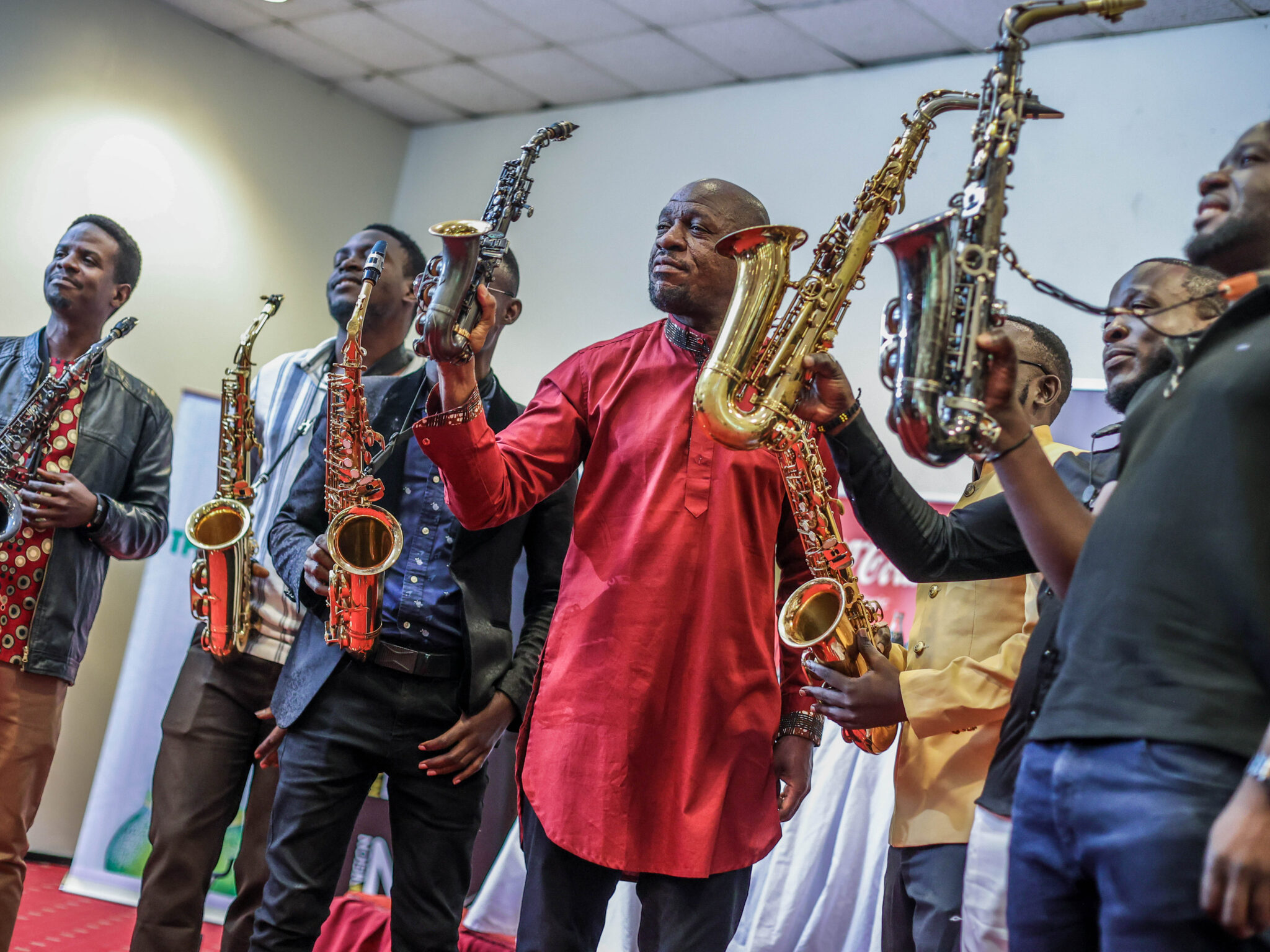
As the United States celebrates 250 years of independence through the Freedom 250 campaign, one of its most enduring cultural contributions continues to resonate across the world: jazz.
Born from the African-American experience, jazz became one of America's most influential cultural exports, travelling across continents and inspiring generations of musicians far beyond its borders. In Uganda, its journey can be traced back more than six decades.
In 1960, legendary American jazz trumpeter Louis Armstrong arrived in Uganda as part of the United States State Department's Jazz Ambassadors programme. He performed two concerts at Nakivubo War Memorial Stadium, introducing Ugandan audiences to a musical tradition that would later inspire local musicians, educators and enthusiasts.
According to Dr. Nicholas Ssempijja of Makerere University, jazz had entered Uganda long before it became visible to the wider public. "There is no definitive record of when jazz first arrived in Uganda, but by the 1980s it was already circulating among Ugandans who had studied, worked or travelled abroad. These travellers returned with records and tapes featuring artists such as Miles Davis, Duke Ellington and John Coltrane, sharing them through private listening sessions and social gatherings," he explains.
Despite its rich musical heritage, jazz initially struggled to gain widespread acceptance. Unlike popular genres built around familiar rhythms and melodies, jazz's improvisation and complex harmonies often appeared difficult for new audiences to appreciate. "It was considered difficult music. People found it hard to understand and hard to relate to," says Dr. Ssempijja.
Yet a dedicated community of broadcasters, musicians and cultural enthusiasts kept the genre alive. Radio stations such as Sanyu FM and Radio One introduced listeners to jazz programming, while influential promoters created spaces where audiences could discover and appreciate the music. The growth of jazz in Uganda was further strengthened through cultural exchange initiatives supported by the United States. Through performances, workshops and educational programmes, American musicians engaged directly with local artists, exposing them to authentic jazz traditions while encouraging them to develop their own interpretations.
The U.S. Embassy in Uganda played an important role in these exchanges, helping nurture musicians who would later contribute to Uganda's growing jazz community. A major turning point came when jazz entered formal education. Around 2008 and 2009, Makerere University incorporated jazz performance and improvisation into its music curriculum.
Students could now study not only how to perform jazz, but also its history, theory and cultural significance. This mirrors one of the reasons jazz has remained central to American cultural life. Across the United States, jazz has been preserved through education, festivals, museums, archives and public programmes, ensuring its continued relevance for new generations.
Today, Uganda's jazz scene continues to evolve. Groups such as the Kampala Jazz Orchestra have introduced audiences to large ensemble performances, while church choirs have embraced choral jazz by blending gospel traditions, African vocal techniques and jazz harmonies. Corporate sponsors, festivals and international cultural partners have further expanded opportunities for live performances and artistic collaboration. As a result, jazz in Uganda is no longer viewed as a foreign genre but as a living art form shaped by local experiences and perspectives.
What began with records carried home by returning travellers and landmark visits by American musicians has grown into a distinctly Ugandan movement. Jazz can now be heard in university classrooms, churches, concert halls, festivals and digital platforms reaching audiences around the world.
As America marks 250 years of independence, Uganda's jazz story demonstrates the enduring power of cultural exchange. The influence of jazz is not found in imitation, but in inspiration—in how people and communities adapt an art form, make it their own, and use it to tell new stories.
The Freedom 250 campaign celebrates this shared legacy, highlighting how American culture has connected people across borders and generations while inspiring creativity, dialogue and mutual understanding around the world.
